
System design

Mapped out business operations to design tech-driven solutions for a net manufacturing workshop. The goal was to modernize workflows and streamline processes across areas.
Problem Statement

The workshop faced inefficiencies due to manual logistics and disconnected documentation across teams. Data often had to be copied repeatedly and manually cross-referenced. These issues led to delays, frequent errors, and miscommunication, hindering operational efficiency and client service.

Users

The solution had to accommodate six user roles:

  • Production
  • Warehouse
  • Procurement
  • Commercial (Sales)
  • Management
  • Human Resources (HR)

My Role

I was responsible for understanding organizational processes and mapping interactions between different roles. My tasks included:

  • Conducting research to uncover workflows and pain points.
  • Creating process maps and user flows for technology solutions tailored to organizational goals.
  • Defining functional requirements and designing wireframes.
  • Presenting solutions to department heads for feedback and iteration.

Process

1. Research & Analysis

  • Document Review: Analyzed existing workflows, documents, and templates.
  • Interviews: Conducted interviews with employees from different roles to understand their needs, challenges, and goals.
  • Contextual Inquiry: Observed team workflows, including how they filled forms, accessed information, resolved issues, and addressed misunderstandings.


2. Process Mapping

  • Mapped out organizational processes to visualize dependencies and inefficiencies between roles.


3. Defining Functional Requirements

  • Identified and documented key functional needs to ensure the technology would address core pain points. (And to limit scope)


4. User Flows

  • Developed role-based user flows, outlining specific tasks, permissions, and interactions for each of the six roles.


5. Logic for Business Processes

  • Designed logic to automate and synchronize key processes, including conditions and dependencies.


6. Information Architecture & Wireframes

  • Created the information architecture and interactive wireframes for key system components, ensuring clarity and usability.

Key Decisions

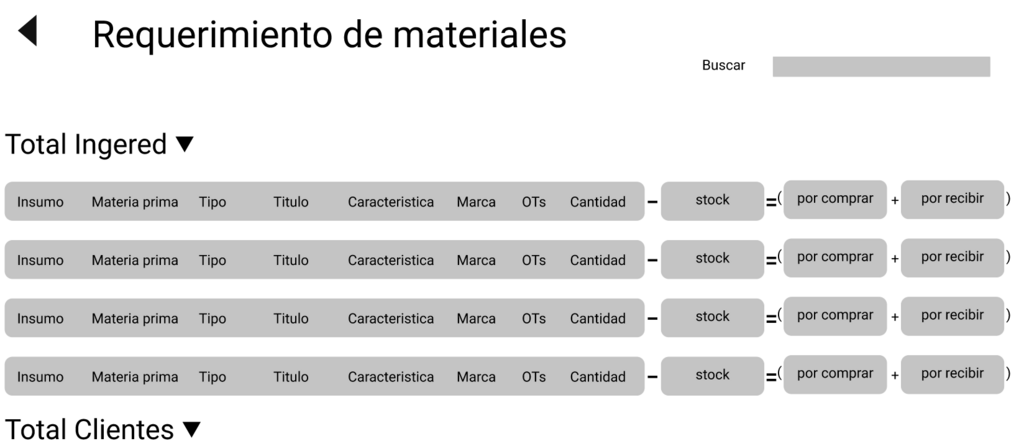
Material Requirements Calculation:

Defined a logic where "Material Required - Stock Available = (To Buy + In Transit)." This allowed the procurement team to quickly identify if materials were missing or already on the way, reducing delays in fulfilling production orders.
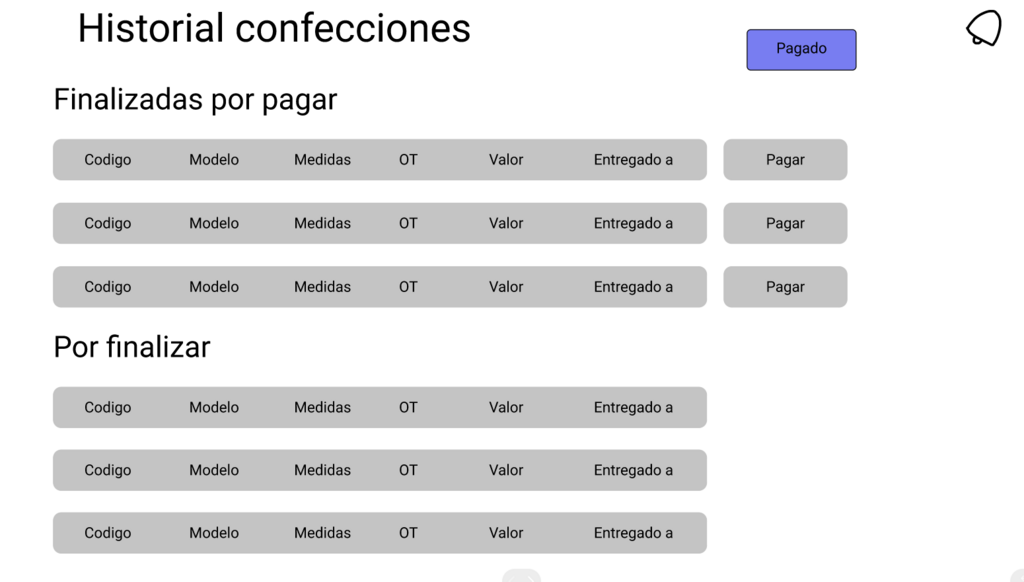
Production History Screen:

Enabled production team to assign specific tasks to workers. Once marked as completed by production, HR could view pending payments and finalize worker compensation. This streamlined payroll processes for task-based payments.

Work Orders:

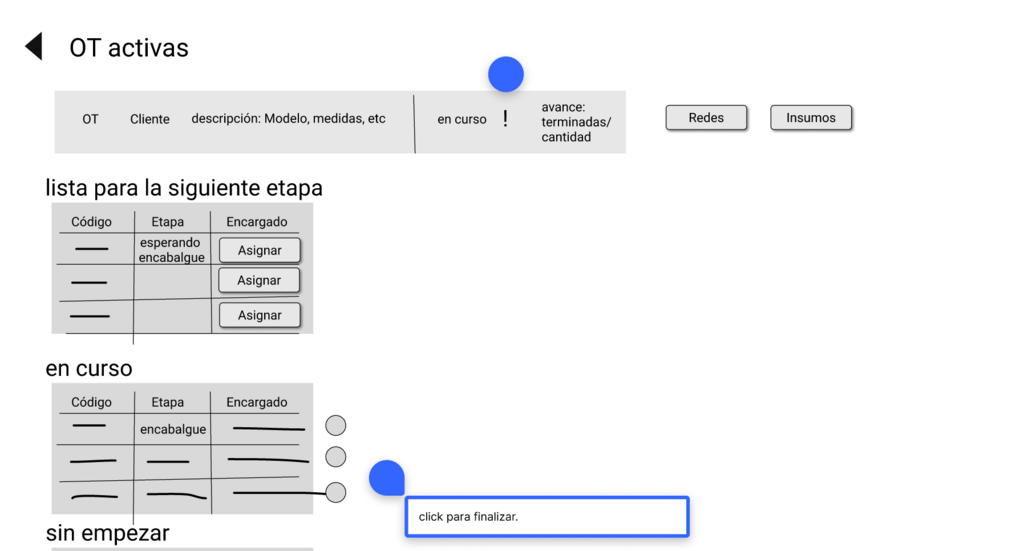
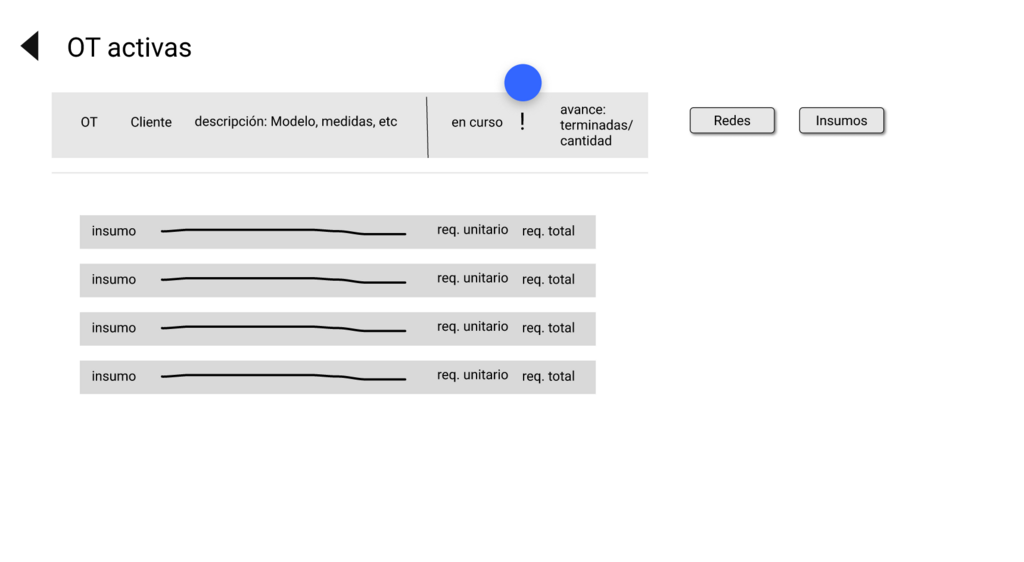
Designed the work order screen to address production’s needs for managing active orders efficiently. This includes tracking progress for each batch, identifying nets currently in production, assigning tasks to workers, and reviewing the materials required for each order. The goal was to provide production with an intuitive interface that centralizes critical information to streamline decision-making and enhance operational clarity.


The screen displays:

  • Order Details: Includes order code, client, and net specifications (e.g., model, dimensions).
  • Shows the number of nets currently in production and the overall progress (completed/total quantity).
  • Highlights with an "!" when nets are ready for the next stage, prompting worker assignment.

Additionally, each order features two actionable buttons:
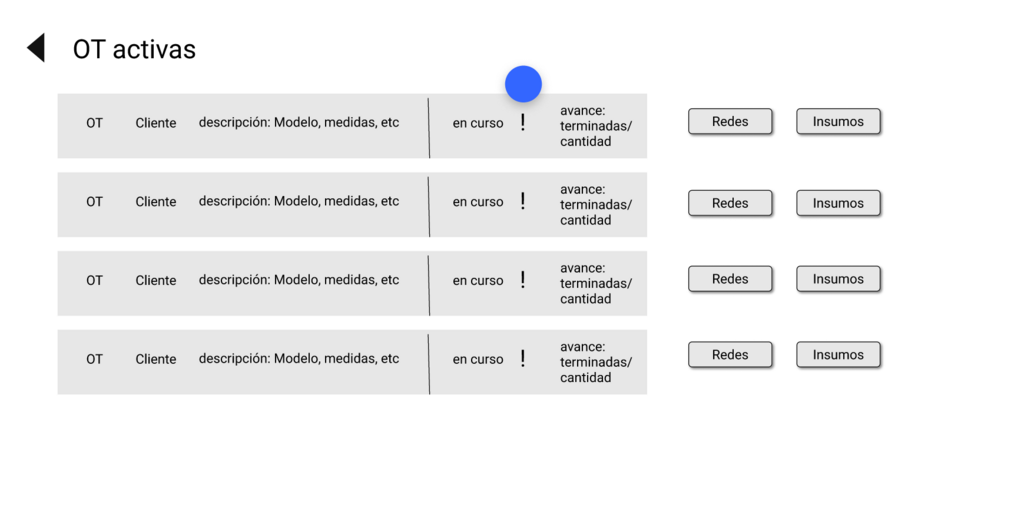
  • "Nets": View the list of nets within the batch, their current production stage, and assign or view the responsible worker.
  • "Materials": Lists the materials needed to fulfill the order, including both unit and total quantities.

List of current work orders

"Nets" view
"Material" view

Contact